10 Essential Tips to Reduce Your Web Hosting Cost?
In today’s digital landscape, managing web hosting cost is crucial for businesses of all sizes. Many entrepreneurs face budget challenges when selecting hosting services. The options are overwhelming, making it easy to overspend. Understanding the nuances of web hosting can help you find the right balance between quality and cost.
Optimizing your web hosting cost involves evaluating your needs. Not all hosting plans offer the same value. You might be paying for features you don't use. Exploring alternatives can lead to significant savings. Reliable web hosting doesn’t have to break the bank, but it requires careful consideration.
Many overlook essential factors that impact web hosting cost. For example, traffic spikes can lead to unexpected fees. Additionally, choosing the right plan can mitigate future expenses. It’s worth reflecting on your usage patterns and needs. By doing so, you can make informed decisions that enhance your online presence while keeping costs in check.

Understanding the Factors Influencing Web Hosting Costs
When considering web hosting costs, various factors come into play. According to a 2023 report by HostingAdvice, performance demands, storage needs, and expected traffic levels significantly influence pricing. Choosing the right plan can lead to substantial savings. For instance, shared hosting is often cheaper but may limit resources. Dedicated servers offer better performance at a higher cost.
One tip to cut costs is to analyze your actual usage. Monitoring your website's traffic can help you choose an appropriate plan. You might discover that your site remains low-traffic during certain months. In such cases, switching to a lower-tier plan can provide significant savings without sacrificing performance.
Another important aspect to consider is overages. Some hosting providers charge extra for bandwidth or storage use beyond the plan. According to a study from WebsiteToolTester, unexpected charges contributed to 42% of customer dissatisfaction in hosting services. To mitigate this, always check your limits and ensure you choose a plan that aligns with your growth. Plan for fluctuations, and you can avoid unnecessary expenses.
Comparing Shared vs. Dedicated Hosting: Cost-Effectiveness Analysis
When considering web hosting options, the choice between shared and dedicated hosting is crucial. Shared hosting can be budget-friendly, as multiple websites share the same server resources. This often leads to lower costs, making it ideal for small businesses or personal sites. However, performance can suffer during traffic spikes, and security might be at risk. It's important to assess your project's needs before deciding.
On the other hand, dedicated hosting provides an entire server solely for your use. This translates to better performance and heightened security. However, it's generally more expensive. A dedicated server allows full control over configurations, which can be a decisive factor for larger businesses. Cost-effectiveness largely depends on your site’s traffic volume and resource requirements.
To effectively reduce web hosting costs, consider these tips: Evaluate your actual bandwidth needs. Paying for unused space is unnecessary. Regularly review your hosting plan for options; many providers offer discounts for annual payments. Optimize your website to handle more traffic on a shared server, reducing the need for that expensive upgrade. Ultimately, the right choice balances cost with performance and security.
Utilizing Cloud Hosting Options to Optimize Your Expenses
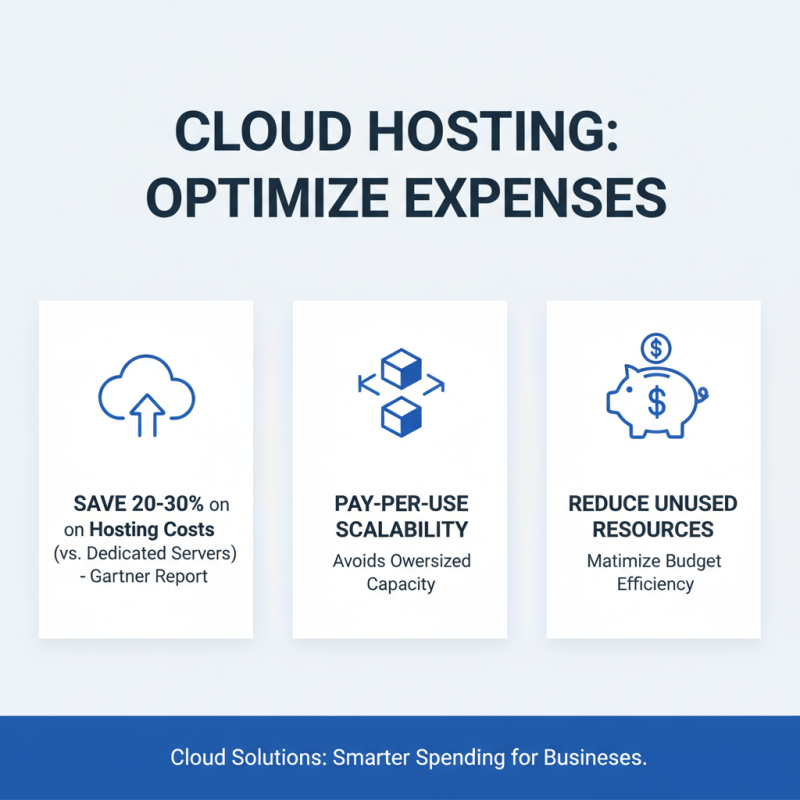
Cloud hosting provides a unique opportunity for businesses to optimize their web hosting expenses effectively. According to a report from Gartner, companies can save up to 20-30% on hosting costs by utilizing cloud resources instead of traditional dedicated servers. The scalability of cloud solutions allows businesses to pay only for what they use. This avoids overspending on unused capacity, a common issue with fixed server plans.
Moreover, cloud providers often offer advanced features that enhance efficiency. A study by Forrester found that organizations using cloud services experienced a 40% reduction in infrastructure management time. This leads to lower operational costs and allows IT teams to focus on strategic projects. Despite these advantages, organizations must critically evaluate their needs. Not every workload is suitable for the cloud, and misusing these services can lead to unexpected expenses, undermining intended savings.
Transitioning to a cloud hosting model also presents challenges. Managing multiple cloud services can complicate budgeting. A survey indicated that nearly 30% of businesses face difficulties tracking cloud spending. Businesses need to implement monitoring tools and establish clear policies. Balancing cost-savings with service efficiency is crucial to achieving optimal results.
Leveraging Discounts and Promotions from Hosting Providers
Many web hosting providers offer discounts and promotions throughout the year. Keeping an eye on these offers can lead to significant savings. Seasonal discounts often occur during holidays or major sales events. Some providers might even offer limited-time offers to attract new customers. This is a great opportunity for those looking for affordable hosting options.
When considering a hosting provider, don’t overlook loyalty discounts. Existing customers may receive reduced rates upon renewal. Regularly checking your provider's website can help you discover these hidden gems. It's essential to read the fine print. Sometimes, promotions may come with limitations or restricted services. Understanding these can prevent unexpected costs later.
While discounts can lower your expenses, not every deal is worth it. Some may lure you in with attractive prices but lack essential features. Be cautious when choosing based solely on price. Always compare the services included. Research user reviews to gauge reliability and performance. Balancing cost with quality remains crucial in making your choice.
Monitoring Resource Usage to Avoid Unnecessary Overages
Monitoring your resource usage is essential to manage web hosting costs effectively. Many website owners overlook this crucial aspect. They may unknowingly exceed their resource limits, leading to unexpected charges. Regularly checking your server's CPU, RAM, and bandwidth can reveal patterns in usage. This insight allows you to adjust your hosting plan as needed. Ignoring this can result in hefty bills.
You don't need to be a tech expert to monitor usage. Most hosting services offer dashboards to visualize resource consumption. Set aside time each month to review these statistics. Look for spikes in usage and investigate the causes. Perhaps a specific page is getting more traffic or a plugin is consuming too much memory. Assessing these factors can help in making informed decisions.
Overspending often results from a lack of attention. Consider whether you need all the features your current plan includes. Sometimes, scaling back or switching to a more suitable plan can lead to significant savings. Small changes can make a difference. The goal is to stay proactive rather than reactive. Regular monitoring promotes better budgeting and ensures you avoid unnecessary costs while optimizing your website’s performance.