How to Choose the Best Hosting Providers for Your Website?
Choosing the right hosting providers for your website can be daunting. With countless options available, making the best choice is crucial. According to hosting expert Sarah Williams, "Your website's performance relies heavily on your hosting provider." This highlights the need for careful selection.
When examining hosting providers, consider factors like speed, reliability, and customer support. Ensure the provider aligns with your website's specific needs. Many overlook hidden costs and renewal fees, which can impact long-term budgeting. Research customer reviews, but remember that experiences may vary.
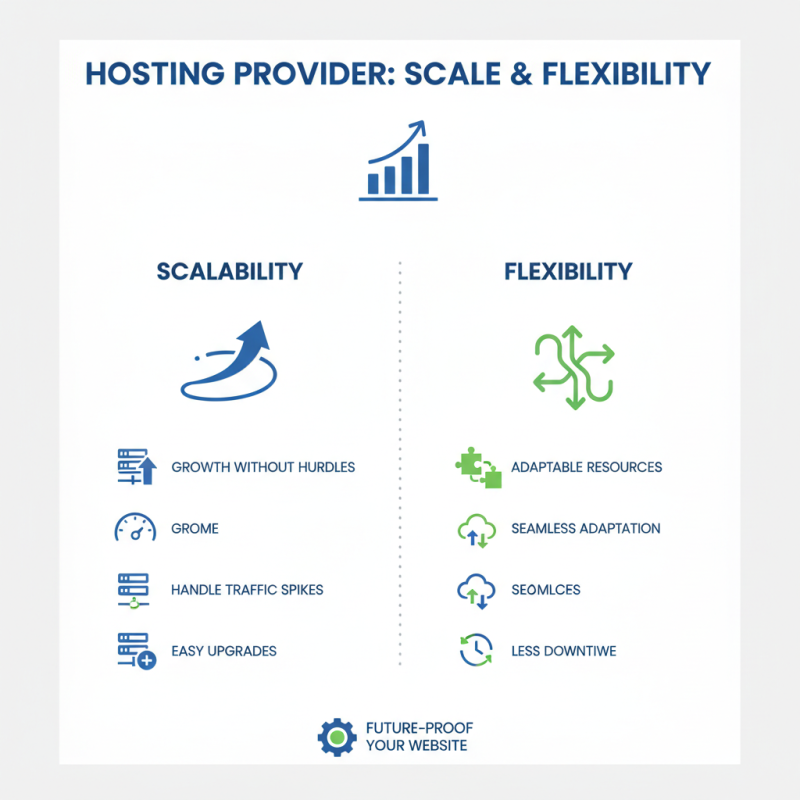
Furthermore, not all hosting providers cater to every type of website. It’s essential to reflect on what features are vital for your goals. For instance, do you need e-commerce capabilities or manageable scalability? Choosing wisely can enhance your website’s success and user experience. Be prepared to revisit your choices if they don’t meet your evolving needs.

Understanding Different Types of Web Hosting Services Available Today
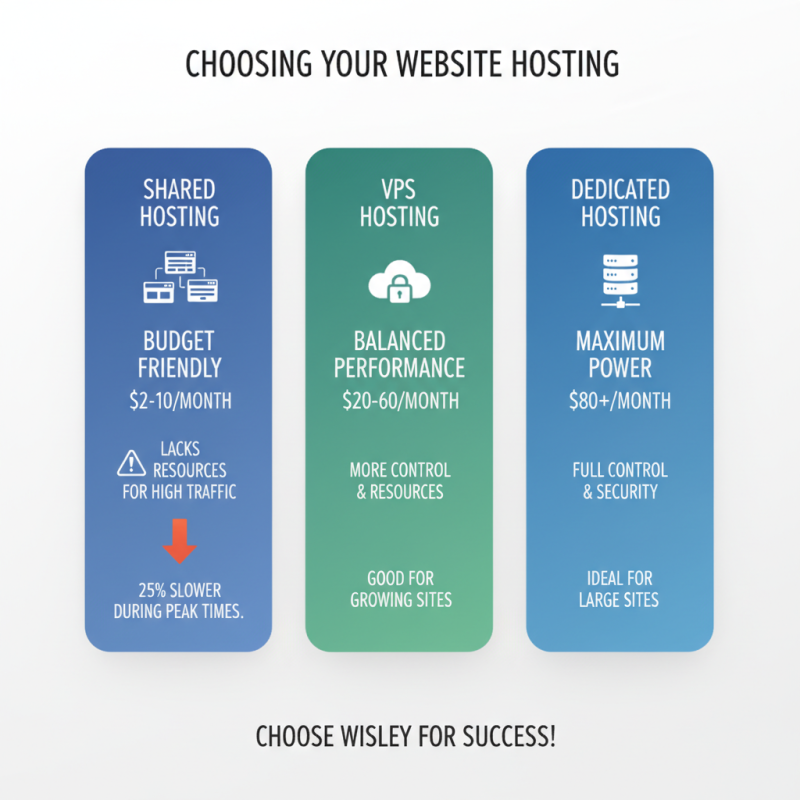
When choosing a web hosting service, it's crucial to understand the different types available. Shared hosting is often the most budget-friendly option. It allows multiple websites to share the same server resources. This is great for beginners but can lead to slower speeds during traffic spikes.
VPS hosting offers a step up. You still share a server, but you have your own dedicated resources. This is ideal for growing websites needing more control and stability. However, it requires some technical knowledge to manage effectively. Consider your expertise before making this choice.
Dedicated hosting provides an entire server for one site. It ensures maximum performance and security but comes with a high price tag. Only opt for this if your website requires substantial resources.
Tips:
Before committing, assess your website's needs. Research online reviews for insights into service quality. Don't be afraid to start small. You can always upgrade as your site evolves. Prioritize reliable customer support in your decision-making process, as it can save you time and stress later.
Evaluating Performance Metrics: Uptime, Speed, and Response Time
When selecting a hosting provider, evaluating performance metrics is crucial. Uptime is paramount. A service should aim for 99.9% uptime, as even slight downtimes can lead to substantial losses. Reports show that 97% of customers expect websites to load within 2 seconds. Delays can drive users away.
Speed directly impacts user experience. A one-second delay can reduce customer satisfaction significantly. Research found that 53% of mobile users abandon sites that take over three seconds to load. Speed matters deeply, especially in e-commerce. Each millisecond counts in transactional environments.
Response time is another key metric. It measures how quickly a server responds to requests. Ideal response times should be under 200 milliseconds. Slow responses can frustrate users, leading to a higher bounce rate.
Tips: Always test loading speeds before committing. Use tools to measure uptime consistently. Don't overlook the importance of a responsive support team. If response times lag, it may hint at larger issues.
How to Choose the Best Hosting Providers for Your Website? - Evaluating Performance Metrics: Uptime, Speed, and Response Time
| Hosting Provider |
Uptime (%) |
Average Speed (ms) |
Response Time (ms) |
| Provider A |
99.9% |
200 |
150 |
| Provider B |
99.8% |
250 |
160 |
| Provider C |
99.7% |
300 |
180 |
| Provider D |
99.5% |
350 |
200 |
| Provider E |
99.9% |
150 |
120 |
Analyzing Customer Support Options: Importance of 24/7 Assistance
When selecting a hosting provider, customer support is often overlooked. Many website owners focus on pricing and features. However, strong support, especially 24/7 availability, can be a lifesaver. Imagine facing a technical issue late at night. Without immediate help, your website could suffer. This downtime may lead to lost visitors and revenue.
Reliable customer support means quick resolutions. Look for providers that offer multiple channels: live chat, phone, and email. Each method has its pros and cons. Some users prefer instant responses, while others enjoy detailed email exchanges. Think about your preferences. You might need to wait longer on some channels. That can be frustrating.
A provider's support team should be knowledgeable and helpful. It’s beneficial to read customer reviews. They often highlight real experiences. You may find complaints about slow response times or unhelpful staff. Reflect on these experiences. No service is perfect, but transparency and effort matter. A good support team can make your hosting experience much smoother.
Comparing Pricing Structures: Shared, VPS, and Dedicated Hosting Costs
Choosing the right hosting plan is crucial for your website's success. Pricing structures differ significantly between shared, VPS, and dedicated hosting options. Shared hosting is the most budget-friendly, often costing between $2 to $10 per month. However, this plan may lack the resources needed for high traffic. One report indicated that shared hosting could slow down a website by 25% during peak times, affecting user experience.
VPS hosting offers more power and flexibility, typically ranging from $20 to $100 monthly. This option supports better scalability and can handle increased traffic without compromising performance. A survey revealed that 74% of users experienced faster load times after switching to VPS. Still, the initial setup can be complex for some, and the costs may grow as your needs expand.
Dedicated hosting is the most robust option, with prices averaging between $80 and $500 per month. It grants complete control over the server environment and is ideal for large businesses. Yet, many small businesses find these costs prohibitive. In a recent study, 42% of small businesses reported they felt overwhelmed by the pricing and features offered. Balancing costs with performance needs is essential for any website owner.